It wasn't the data that was wrong. It was the context.
An audit can be technically flawless and still measure the wrong thing. That's not a theory. It came out of our own test runs.
As we ran data from a wide range of business profiles through the Visibility Report, the same pattern kept showing up. The system ran every time. Data came in, the check completed, the report was generated. On paper, everything was green.
When we read those reports as people, not as output, something stood out: the question wasn't whether the system measured correctly. It was whether it measured the right thing.
The template worked. The context didn't.
The original logic behind the Visibility Report was built mainly for local, appointment-based businesses. For a heating engineer, a hairdresser, an accountant, or another local service, these are the right questions:
- Can they be found on Google Maps?
- Do they have a proper Google Business Profile?
- Are reviews, services and opening hours in order?
- How fast do they respond to an enquiry?
For an online, B2B, or consulting business, those same questions are secondary. What matters there looks more like this:
- How does this professional show up in an AI-based search?
- Which topics does a generative search engine associate them with?
- Is their professional entity and source base strong enough to be seen as credible?
- How relevant and conversion-ready is their web presence, on its own terms?
The report wasn't a problem because it calculated something wrong. It was a problem because it ran the same template against a different kind of business.
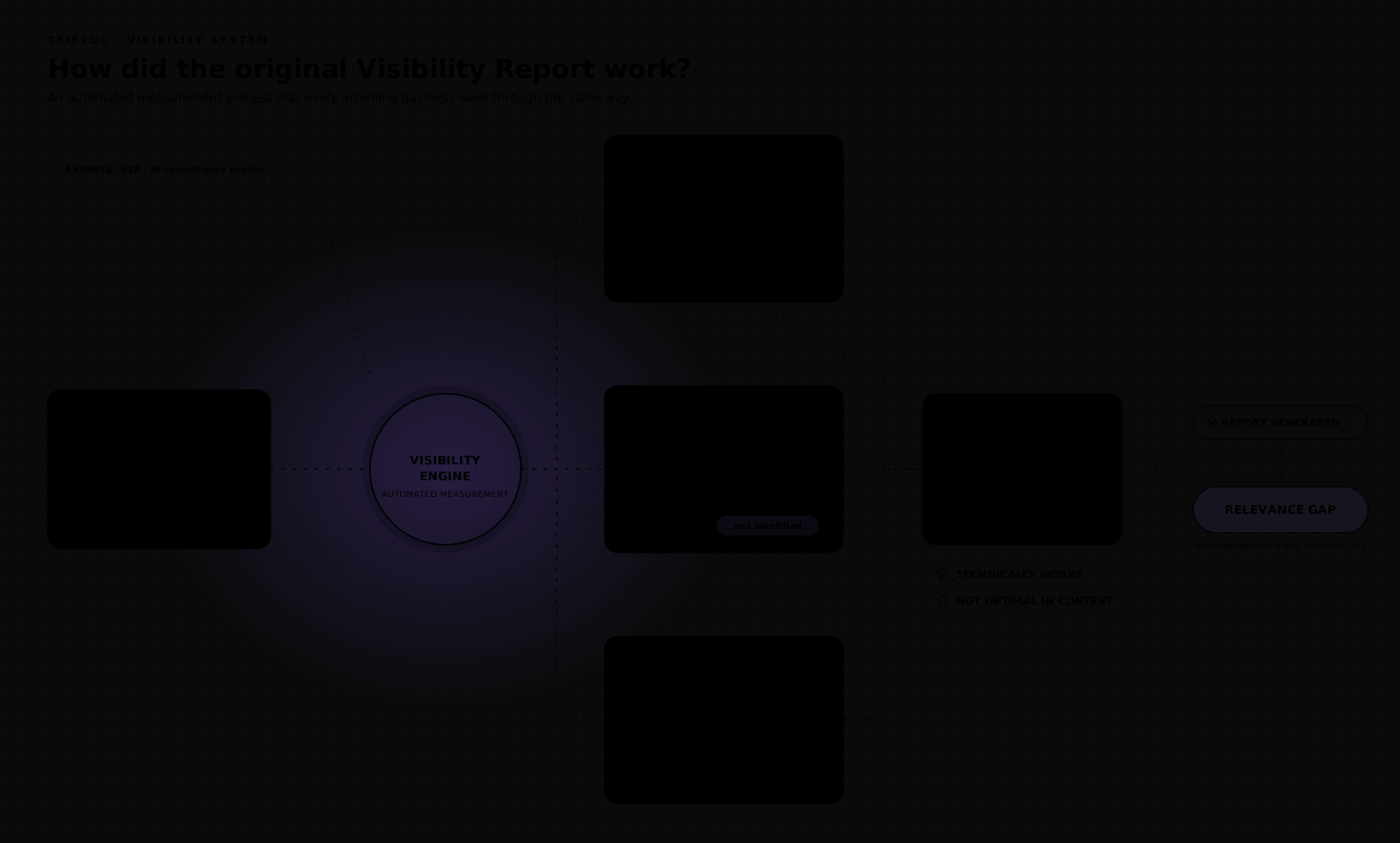
The original process: every profile lands in the same one report template.
The real lesson
An audit system isn't intelligent because it collects more data. It's intelligent because it knows which data matters for that specific business.
That means two separate measurement logics, not one generic process forced onto everyone:
Local service → Google Business Profile, Google Maps, local search, reviews, response time.
Online / B2B / consulting / digital business → professional search visibility, content relevance, professional entity, AI-based search visibility, GEO.
"No data found" is not the same as "no"
The test runs surfaced a second, equally important problem. If the system can't find a clear Google Business Profile, it shouldn't automatically conclude "no Google Business Profile." There can be more than one reason a system fails to find a match.
So the system needs to distinguish three states, not two:
- FOUND – reliably identified.
- NOT FOUND – confirmed absent.
- UNKNOWN / NEEDS VERIFICATION – we couldn't reliably identify it.
That looks like a small distinction. It's actually one of the basic principles of trustworthy automation: knowing the difference between something being absent and something being unproven. In an uncertain state, the system shouldn't produce a false negative. It should recommend the next, relevant check instead.
Where that led: GEO
For an online or B2B consultant, whether they show up on Google Maps usually isn't the most useful question. What matters more is what a potential client sees about them when they search in ChatGPT, Perplexity, or Gemini. That's a different kind of visibility, which is why we started building a separate GEO / AI visibility track for these businesses.
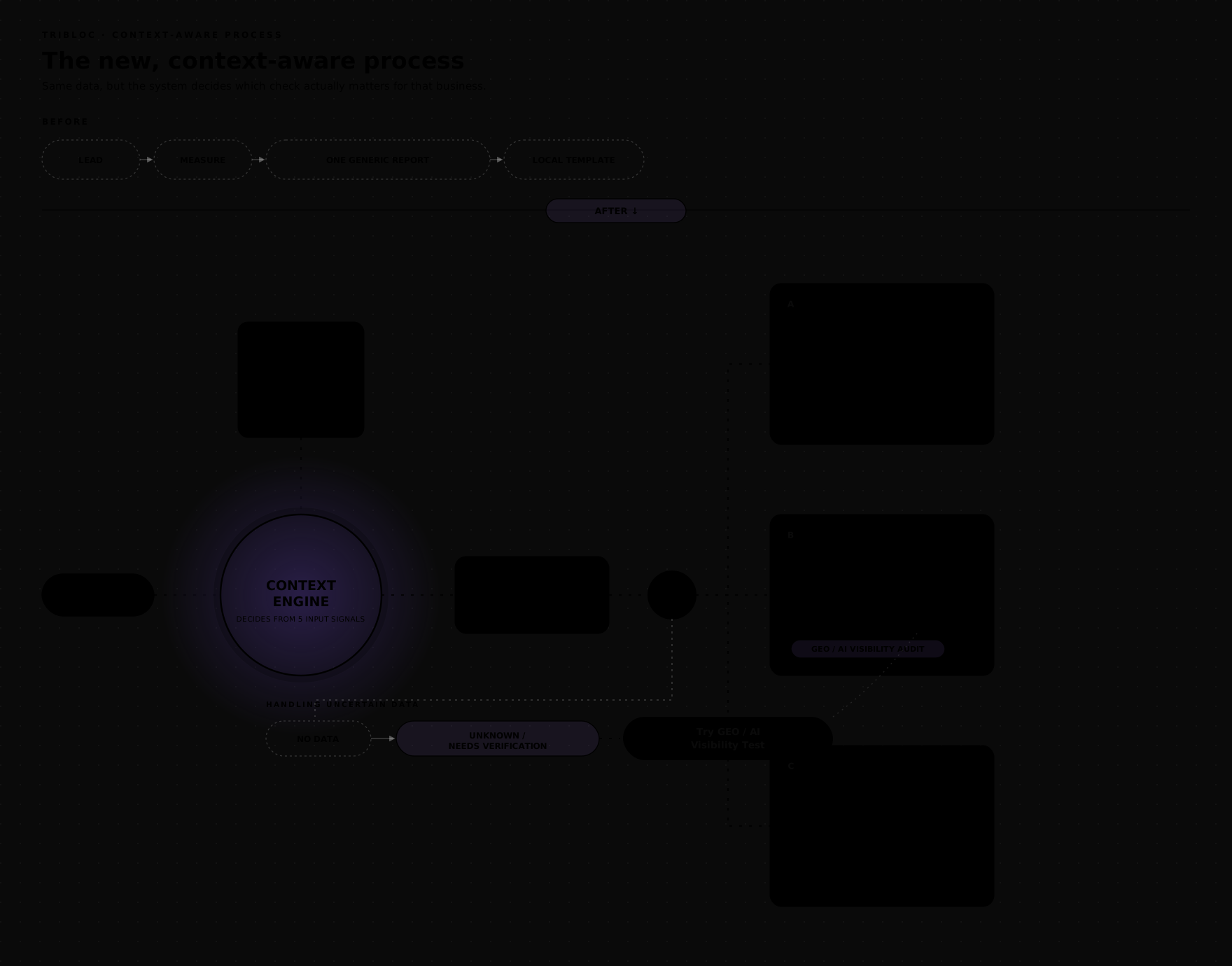
The new logic: the system decides which check actually matters for that business.
What we're building from this
The most useful part of this wasn't the mistake itself. It was what it taught us. An automation becomes genuinely intelligent not when it just executes a process, but when it decides, from context, which process to run.
That's why we don't want every business measured the same way. The target logic is:
Lead → Context → Business / Vertical Classification → Routing → Relevant Audit → Context-aware Report
The goal isn't to collect more data. It's to read the right data in the right context.

Tribloc
We don't build websites. We build systems.
We don't want to measure everyone the same way. We want to measure what actually matters for that business.
We'll build this for your business too.
Free consultation: 15 minutes, a concrete recommendation, no obligation.